 Bishnu Pokharel
English Writer George Orwell used an ironical slogan in his novel- 1984, ‘War is peace. Freedom is slavery. Ignorance is strength.’
Exactly, freedom is slavery and so called freedom fighters are slaves of violence, inhumanity and madness. I don’t know is it appropriate or not in other sense, but idea of freedom in South Asian sub-continent is slavery of violence, inhumanity and madness.
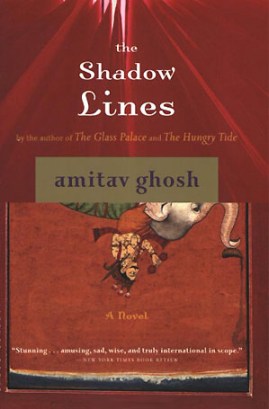
We South Asians think that freedom means impunity, absurdity, anarchy, immorality, inhumanity, clan politics and communal thinking. But, it’s not my argument; we can find that argument in three different forms of partition literature; Amitav Ghosh’s novel The Shadow Lines, Saadat Hassan Manto’s short story Toba Tek Singh and Faiz Ahmad Faiz’s poem The Dawn of Freedom.
These three great post-colonial literary works from South Asia show that the idea of freedom is contaminated with violence and communal mutiny and common people are suffering by that contaminated idea of freedom. According to these three different forms of literature; freedom means breaking brotherhood, divide mother’s heart and lapel into many pieces and draw lines between father and son, mother and daughter, brother and sister and even husband and wife.
In ‘The Shadow Lines’, after death of their grandparents Thamma’s family wanted to be free from each other and they divided in two families by drawing lines on the wall of their traditional house, like Line of Control between India and Pakistan post 1947. Two families started to behave with each other like enemies and that traditional faithful house became a “Ruin of Faith”. The idea of freedom broke brotherhood in family and created enemy under a roof. Writer tries to show that how did Indian people lose their brotherhood in partition time through the situation of that traditional house. Family members got freedom but they lost their brotherhood, faith, trust, collective happiness, love and unity. Same thing happened in India after independence.
Partition and its aftermath gave deep sock to people’s mind and that great shock changed their thinking. People couldn’t forget their sorrows and those sorrows are still alive in people’s mind as “Shadow Lines”. Those shadow lines aren’t allowing to them be secular and broad minded like Thamma. Because of that reason, for Thamma, freedom means physical power, communal dignity and killings. She likes physically strong relative like Robi and is proud of him. She thinks that physically strong person can “fight for freedom”.
The main character in ‘The Shadow Lines’, Thamma, gives her very lovely gold chain for fighting to kill people of other community, who were not foreigners 18 years ago. And she told to her grandson, “I gave it to fund the war. I had to, don’t you see? For your sake; for your freedom! We have to kill them before they kill us; we have to wipe them out.”
Her statement shows that for her freedom means killing and only clan dignity.
This novel also advocates individual freedom through character Ila. In her view freedom is too narrow and individual. She wants to break all cultural boundaries and enjoy individual freedom, which is so contradictory with Thamma’s idea of freedom. We can fiund other type of idea of freedom in ‘The Shadow Lines’, which is “Freedom of Imagination”. May be writer wants to say that we can divide country or territory in many lines, but we can’t divide people’s memories and imaginations, they are free to memorize their past. In this novel, Ghosh strongly denies the partition as basic idea of freedom. And he tries to deliver that “nobody can stop freedom of imagination” through his texts.
Saadat Hassan Manto’s short story ‘Toba Tek Singh’ shows idea of freedom is an absurdity and death. He ironically symbolized lunatic people and satires those mentally abnormal leaders, who created artificial line on the wide chest of mother India. In this story the main character Bishan Singh refused to go India, he stands on “no-man’s land” area between India and Pakistan and finally dies there.
Manto tries to say that idea of freedom through partition is an “absurdity and madness of leaders”. Partition is not actual freedom, it is only madness. In other way, he tries to say that death is the great freedom than other freedom. That’s why, Bishan Singh died in no-man’s land and he got great freedom.
According to Faiz Ahmad Faiz’s poem ‘The Dawn of Freedom’, the real idea of freedom is not partition. Partition is a delusion and misinterpretation of actual freedom.
In his poem, Faiz symbolizes dawn and says, “it isn’t that dawn, which we had wished.” And, he calls for another struggle for actual freedom.
At last, we can say that all three literary persons juxtaposed freedom with communal violence, impunity, absurdity, anarchy, immorality, inhumanity, clan politics, death, killing, rape, social crime and bloody partition.
Because of that bitter fact; we can say like Orwell’s: Yes! Freedom is slavery!
 Voice of South Asia
Pingback: Slavery of violence or Freedom? | Voice of Southasia